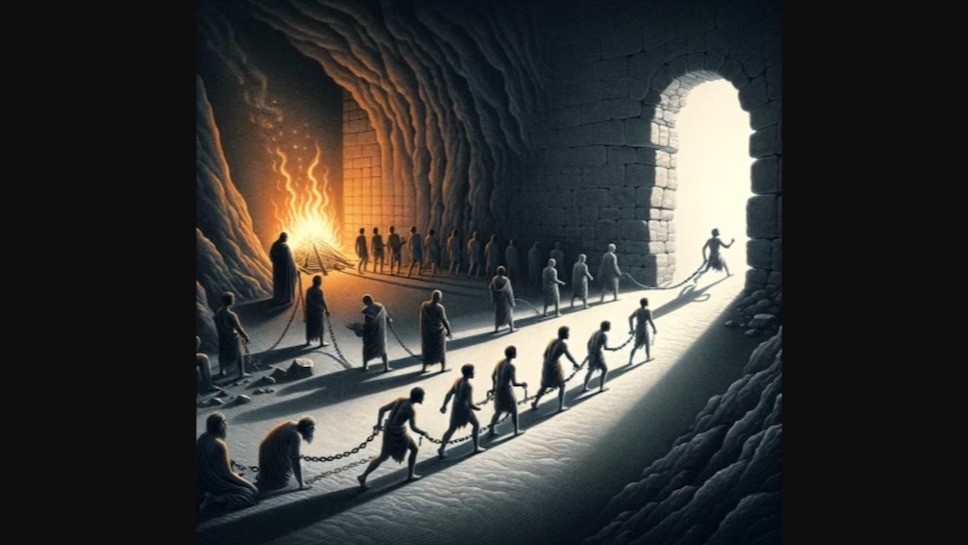
Our world today is crowded with new shadows. Ideologies, algorithms, and utilitarian calculations too often replace the patient pursuit of truth. Many young people are taught to measure their worth — and the worth of their education — solely by what is useful, marketable, or profitable. Others are led to believe that truth itself is merely a matter of perspective. The combination of moral relativism and utilitarianism has hollowed out the moral core of Western civilization.
When truth becomes relative and goodness is reduced to utility, civilization begins to lose its coherence. The very idea of a common good — of a shared moral horizon — disappears. We see the symptoms all around us: deepening polarization, loneliness, and despair.
Universities once existed to resist these very forces. They were founded on the conviction that truth exists, that reason can discover it, and that education should form both intellect and character in its service. Yet many institutions have abandoned that mission. In chasing relevance, they have lost their roots.
At the University of Dallas, we hold fast to a different vision — one rooted in the conviction that the remedy for relativism and utilitarianism lies in a liberal education in the classic sense of the word. That is, an education grounded in truth, both as revealed through the Judeo-Christian heritage and cultivated by the Western intellectual tradition.
The liberal arts are not luxuries; they are in many ways the foundation of a free society. They teach us to see reality as it is, not as any particular ideology would have it. They form the habits of mind and heart that allow us to discern the good and to act upon it. They bind reason to virtue and knowledge to wisdom.
A true university does not mirror the culture; it renews it. We are called to educate leaders who see beyond the cave — men and women who understand that the health of a nation depends upon the integrity of the soul. Our Core Curriculum, rooted in the great books and works and engaged with the timeless questions of human existence, forms students to seek what is true, to love what is good, and to delight in what is beautiful.
America and Western civilization cannot be sustained if we lose sight of these. Rapidly advancing technologies and expanding economic growth alone may advance America, but to what end? If our country, and indeed, Western civilization, are to thrive in the midst of such forces, we need a common moral vision — a shared understanding of the dignity of the human person and the transcendent source of truth and goodness. A Catholic liberal arts education offers that vision in its fullness.
In the end, renewal will not come from policy or power, but from the formation of persons. One student, one teacher, one classroom at a time — that is how civilization is rebuilt.
At the University of Dallas, we remain steadfast in that mission, confident that truth exists and can be discovered, that wisdom can indeed be pursued, and we are committed to ensuring that the light of a classical education still shines for all who seek it.