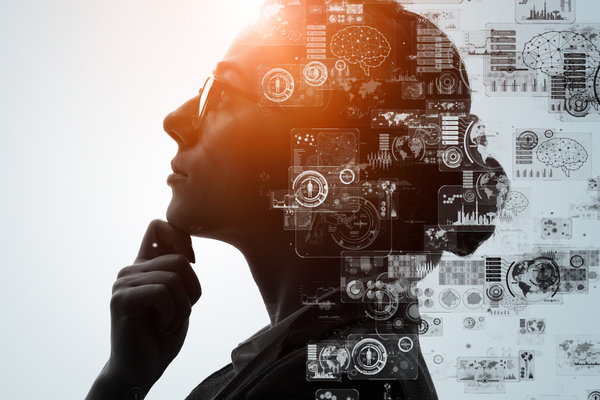
Narcissus at the water’s edge
The ancient Roman poet Ovid tells of Narcissus, a gifted young man who pauses beside a pool for a sip of water. When he looks down, he sees a figure in the depths—handsome, intelligent, compelling. He tries to speak; the figure “speaks” back. He reaches for an embrace; his hands pass through water. Yet he remains transfixed, day after day, until he languishes and dies there—captivated by what he mistakes for a real “other,” when it is only his own reflection.
That image—a person pulled into a mirror—captures something essential about AI.
The AI “mirror”
Shannon Vallor, in her book entitled The AI Mirror, has a powerful opening insight: AI, at its core, is a reflection.
Reflection of what? Of humanity’s digitized past—our words, images, patterns, preferences, and accumulated data. These systems can gather and recombine what has been rendered into digital form with remarkable sophistication. But we should be clear about what is missing: a conscious mind that understands and acts in reality.
AI can generate responses that sound like insight, but it is not human thinking. It cannot enter a personal relationship. And it cannot disclose the deepest question any human being must face: What is the end—the good—for the sake of which I should live?
The real peril: Mistaking reflection for reality
Here’s the danger we should worry about most: we can be “sucked into” AI the way Narcissus was drawn into the pool—treating a reflection as if it were real engagement.
When that happens, AI becomes more than a tool. It becomes a kind of environment—shaping our attention, dulling our judgment, and quietly training us to confuse data fluency with wisdom.
And the antidote is not panic. Vallor is right to point to AI’s genuine promise for addressing complex problems that matter. The antidote is something simpler—and harder: turning our attention back to reality.
Why the liberal arts are “the arts that liberate”
We are taught from an early age how to make sense of the world around us -- through our parents, through our family, through our education, and relying all the while on our senses and ability to think. A truly liberating education forms the habits that help us understand reality and contemplate meaning, purpose and goodness. The liberal arts train us to:
-
Attend to what is real, not merely what is offered
-
Discern what is true, not merely what is plausible
-
Judge what is good, not merely what is efficient
In other words, the liberal arts help us become the kind of people who can use powerful tools without being used by them.
If AI is a mirror, then our present age calls us more urgently toward an education that teaches us when to look—and when to look away.
If we can recover the practices of attention, reasoning, and moral judgment, we can harness AI’s benefits while resisting its most subtle danger: replacing encounter with reflection.
In the next episode, President Sanford will return to Aristotle.


.png)