It’s no secret that Americans’ trust in universities, and in the value of a college degree, has declined dramatically. Tuition has soared as intellectual rigor has eroded. Classrooms have become battlegrounds for ideology rather than training grounds for reason. Many parents and policy makers, not surprisingly, wonder whether a college education is still worth it. But if America is to remain strong and free, we cannot abandon our universities—we must restore them.
Governance Rooted in Principle, Not Politics
Sound governance starts with remembering why universities exist: to pursue truth and educate for freedom. Too many governing boards and administrators have traded that purpose for political posturing and bureaucratic conformity, mistaking activism for education and slogans for substance. Leaders must act on principle, not partisanship, and uphold the university’s duty to truth and justice. Amongst other things, that means, as our Supreme Court has recently made clear, no preferences based on gender or race, no diversity quotas, and no fashionable ideologies that divide rather than unite. It also means restoring standardized testing and merit-based admissions as the fairest measures of preparation. Trustees and presidents must also reassert oversight of sprawling administrative bureaucracies whose priorities have strayed from the fundamental work of education. A university that teaches responsibility must itself be responsible—transparent in budgeting, efficient in administration, and faithful to its mission. These are not culture-war slogans; they are the foundations of trust, accountability, and excellence.
Renewing the Core: The Foundation of Shared Civic Culture
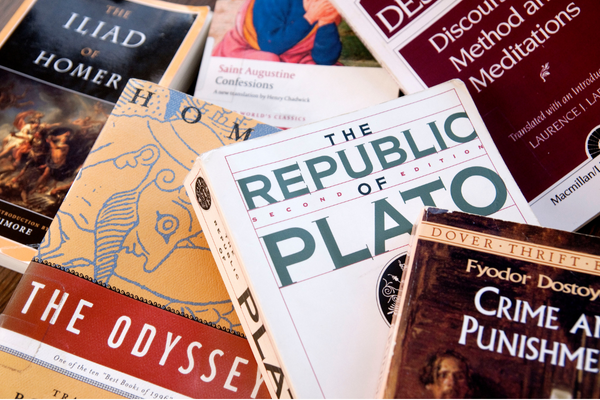
At the University of Dallas, we’ve seen that a rigorous core curriculum is not an antiquated luxury but the very heart of a healthy institution. The liberal arts—literature, philosophy, theology, history, politics, mathematics, and the sciences—teach young people to think freely, reason well and live honorably. When students engage in the great works of Western civilization—from Homer and Augustine to Shakespeare and Lincoln—they encounter the ideas that illuminate life’s enduring questions: What is good? What is true? How should I live?; rather than the propaganda all too common in modern textbooks. These shared texts, guided by professors who often themselves have been shaped by great books, form a common inheritance that unites students of different regions, races, and beliefs in friendship and an earnest search for truth and understanding. In the process, they learn not only how to think independently but how to disagree well. That kind of education forms more than workers; it forms citizens—men and women capable of building families, businesses, and communities.
The Most Practical Preparation for Life
In recent decades, many universities have dismantled their general education subjects in favor of narrow, over-specialized degree programs. Others have distorted their liberal arts curriculum for the purpose of ideological indoctrination. Yet these trends have not produced wiser graduates or stronger citizens. A genuine classical, liberal arts education—one that forms both intellect and character—remains the most practical preparation for any vocation. Far from hindering professional success, this kind of education develops the discipline, judgment, and strong communication skills every profession demands. At the University of Dallas, for example, our graduates are admitted to medical schools at more than twice the national rate—proof that excellence is achieved not despite breadth, but because of it. As artificial intelligence reshapes the workplace, the habits cultivated by a liberal education—clear thinking, moral discernment, creativity, and articulate expression—will become even more essential. Machines can process data, but they cannot form judgment, empathy, or wisdom. Those belong to persons educated in the full sense of the word: men and women who know how to reason, converse, and lead.
Restoring Common Sense to Campus Life
Students do not need more administrative offices devoted to policing speech or mediating microaggressions. They need mentors—professors and deans who hold them to high standards while caring for their growth. Rules should be applied fairly and consistently, not selectively according to ideology. Universities should expect adult behavior: civility, respect for property, and a commitment to free inquiry. Lawlessness on campus should never be excused as “expression.” The opportunity to articulate one’s disagreement is a right; vandalism is not. When a university tolerates intimidation or mob tactics, it fails in its duty to form citizens who can govern themselves. Students thrive in communities with order, purpose, and friendship. And friendship—the ability to love what is true and good with others despite differences—is precisely what our nation lacks. A rigorous core curriculum, taught such that reason replaces resentment, cultivates this civic friendship better than any administrative initiative ever could.
Educating for Freedom and Responsibility
America’s founders believed liberty depends on virtue and knowledge. The same holds true for our universities. When education becomes merely technical, freedom decays into self-interest; when it becomes politicized, it breeds cynicism. But when it returns to its true end—the pursuit of wisdom—it strengthens both the soul and the republic. Universities that govern themselves wisely—emphasizing academic excellence, character formation, and pragmatic career preparation—will regain public trust and thrive. Those that persist in ideological excess will continue to lose enrollment and credibility.
A Call for Renewal
The path forward does not lie in more bureaucracy or federal programs, but in a return to first principles: truth, virtue, freedom, and responsibility. Universities must again be places where ideas are vigorously but civilly debated, where excellence is rewarded, and where the next generation learns that disagreement need not destroy friendship. If we can renew those habits within our universities, we might yet renew them within the nation itself. America became great because it united liberty with wisdom, enterprise with moral restraint. Our universities can once again help sustain that greatness—but only if they govern themselves with prudence and are animated from top to bottom by the love of truth.