Socrates’s conviction is as urgent now as it was in ancient Athens.
We live in a culture that treats education primarily as a transaction: four years in exchange for a credential, a network, and a higher salary. But that is not what education is at its best.
Far from being an escape or a distraction from adult responsibilities, a rigorous liberal arts education enables us to see reality truthfully and to live responsibly within it. Such learning frees us from ignorance, distraction, and the tyranny of our own whims so that we might become capable of wisdom, friendship, and genuine service to others and to society.
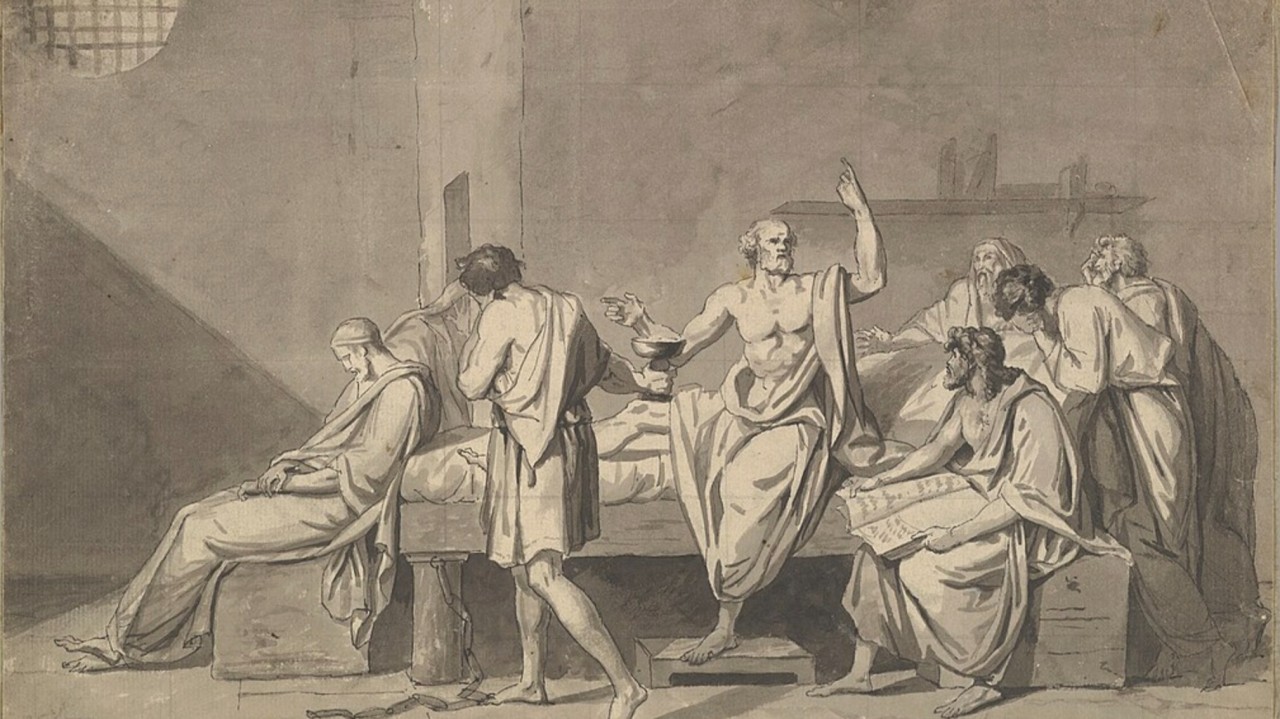
Socrates understood this. He refused to spend his life chasing influence, comfort, or acclaim. Instead, he devoted himself to discovering the truth about justice, courage, piety, and what constitutes the genuinely good life. You can see the joy and delight he took in his work as Athen’s resident philosopher, but that did not make him hesitate to face execution rather than abandon his quest for wisdom. In fact, an essential feature of his philosophy was preparing for just such a moment.
Education as Preparation for Death — by Learning to Live
In Plato’s Phaedo, a dialogue whose setting is Socrates’s last day before his political execution, Socrates describes philosophy as a preparation for death. That may sound morbid until you recognize what he means. To prepare for death is not to seek to accelerate its arrival, nor to cultivate a morose disposition; rather, it is meant to rivet our attention on the things that really matter for a life well-lived.
Most of us are formed by our present cultural script: maximize options, avoid suffering, treat freedom as the ability to do whatever we want so long as we do not overtly harm others. But when freedom is severed from truth and goodness, it collapses into restlessness and anxiety. We end up with endless choices but very little clarity concerning the goods we really ought to seek.
Socrates proposes another path: an examined life that orders our choices, our loves. It teaches us to prefer integrity over advantage, friendship over utility, wisdom over mere information. It reminds us that a life devoted only to securing comfort and status is too small for – and can never truly satisfy – the human soul.
This is why genuine education is always about more than preparing for a job. It is about becoming the kind of person who can be trusted with any job — and with the responsibilities of citizenship, family, and faith.
The “Inefficiencies” That Actually Form Us
At the University of Dallas, we take this Socratic vision seriously.
That is why we sustain a demanding Core Curriculum, demanding majors, and a Rome Program that, judged by strictly utilitarian standards, make little sense. They are “inefficient” in all the ways that matter to a transactional mindset. They require time, attention, and sacrifice, and they do not always translate neatly into a bullet point on a résumé.
But these are the inefficiencies that bring joy and meaning to life, the inefficiencies that put us in the presence of beauty and cultivate lasting friendships, the inefficiencies that prepare us to take roles as leading citizens.
-
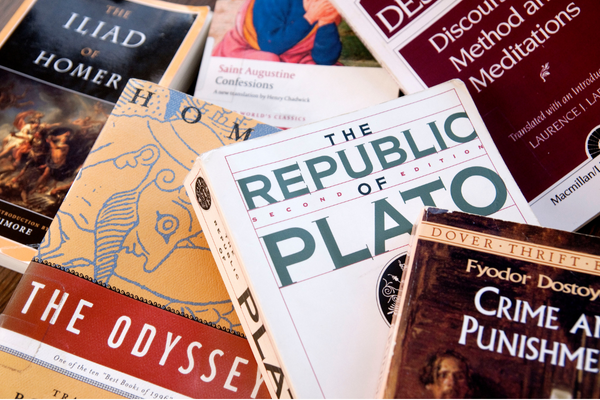
When students wrestle with Plato, Augustine, Dante, and Austen, they are encountering the greatest minds at work and, through them, learning how to ask and begin to answer timeless questions about justice, love, suffering and hope.
-
When students live and study together in Rome, they are not just collecting passport stamps; they are encountering a civilizational inheritance that puts the present moment in its proper perspective, enlarging their sense of what a human life can be.
-
When students participate in the liturgy, experience the arts, and engage in serious conversation, they are not “checking boxes”; they are slowly being habituated to attend to deeper patterns of meaning rather than just being attentive to the surface of things.
None of this is efficient in the way our culture usually counts efficiency. But the deeper question is: efficient for what? If the only goal is rapid credentialing, then yes, such practices are wasteful. If the goal is to form persons capable of wisdom, courage, and friendship — citizens who can sustain a civilization rather than live off its fat — then these “inefficiencies” are indispensable. An education aimed at wisdom prepares students for every professional vocation — and for a life well-lived.
Socrates risked his life because he believed that a life devoted to wisdom, truth, and virtue was better than a longer life devoted to comfort and illusion. He reminds us that the purpose of education is not simply to secure our future, but to help us live now in a manner that aspires to genuine greatness.